
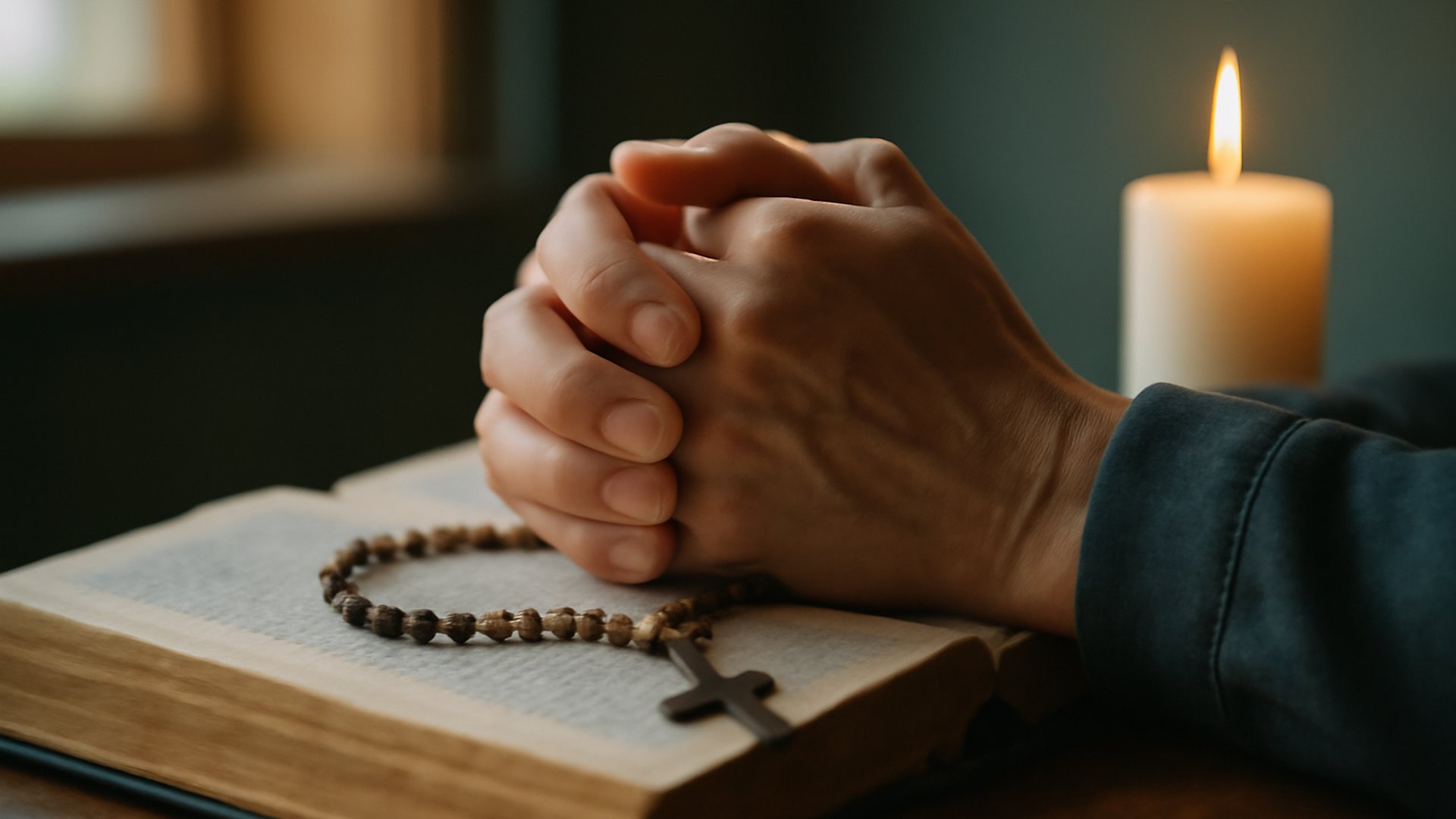
Anxiety is now one of the most common reasons people walk into a pastor's office. According to the National Institute of Mental Health, roughly one in five U.S. adults experiences an anxiety disorder in any given year, and lifetime prevalence is closer to one in three.
The instinctive Christian answer — pray about it — is correct, but often unhelpfully vague. What does that look like at three in the morning when your chest is tight and the sermon you heard last Sunday is nowhere within reach?
This article is a beginner-friendly framework for what prayer actually looks like when anxiety is the presenting problem. It includes five short starter prayers, four practices any believer can learn, and a clear section on when professional help is necessary. It is written by a licensed counselor and pastor, and reviewed by a licensed mental health counselor, because anxiety is the kind of topic that deserves both spiritual depth and clinical care.
What Anxiety Does
Anxiety pulls attention forward in time, fixating on outcomes that have not happened. It tightens the chest, narrows breathing, and crowds out the present moment. Anyone who has lain awake at 2 a.m. running scenarios knows the experience.
Clinically, anxiety is a normal stress response that has become miscalibrated. The body is reacting to a future threat as if it were a present one. The sympathetic nervous system floods the body with stress hormones, and the brain narrows attention to the perceived threat. None of this is moral failure. It is physiology with a story attached.
What Prayer Does
Christian prayer, in its simplest form, returns attention to the present and re-anchors it to a Person rather than a problem. This is not magic. It is the practice of speaking honestly to someone the believer trusts is listening. That alone changes the texture of the moment.
Clinically, the slow breathing, focused attention, and felt presence that prayer involves overlap with what secular therapies call grounding exercises. The neurological effects are similar. The crucial difference, from a Christian standpoint, is the object: prayer is not just self-regulation, it is communion. The body calms because the soul is being heard.
Start With Honesty
Prayers that pretend everything is fine do not address anxiety. They suppress it. Beginners often find more relief from short, blunt prayers — I am scared, I do not know what to do, please help me — than from elaborate ones.
The Psalms are filled with this kind of honesty. Psalm 13 opens with How long, O Lord? Psalm 22 begins with the words Jesus himself quoted from the cross. Psalm 88 is one of the bleakest texts in scripture and never resolves into comfort. The Bible does not require you to clean up your prayer before you offer it.
Use Scripture as a Script
The Psalms are the historical prayer book of anxious believers. Psalm 23, Psalm 27, Psalm 46, Psalm 91, and Psalm 139 are widely used because their authors do not pretend to be calm. Reading them slowly, even out loud, often borrows the calm that is already in the language.
A practical starter list: Psalm 23 for grief and loss, Psalm 46 for overwhelm, Psalm 91 for fear of harm, Philippians 4:6–7 for general anxiety, 1 Peter 5:6–7 for the feeling of carrying too much. Memorize one. Use it the next time anxiety arrives.
The Breath Prayer Technique
Many believers pair short prayers with paced breathing. The Jesus Prayer — Lord Jesus Christ, have mercy on me — fits naturally onto a single in-breath and out-breath. The rhythm slows the nervous system in the same way secular breathing exercises do, while keeping the heart pointed toward God.
A simple practice:
- Find a quiet spot, sit upright, and close your eyes if comfortable.
- Breathe in slowly for a count of four. As you breathe in, silently pray the first half of a short prayer (e.g., Lord Jesus Christ).
- Breathe out slowly for a count of six. As you breathe out, silently pray the second half (have mercy on me).
- Repeat for two to five minutes.
The breath prayer is older than most Christian traditions and has been used by monastics for over a thousand years. It is also nearly indistinguishable, on a heart rate monitor, from clinically endorsed breathing exercises for anxiety. The Christian content is not optional; it is what makes the practice prayer rather than technique.
Lectio Divina for Anxious Moments
Lectio Divina is a slow, prayerful reading of a short scripture passage in four movements: read, reflect, respond, rest. It is designed for engagement with God through scripture rather than information transfer.
- Read. Choose a short passage (3–5 verses). Read it slowly, out loud if possible.
- Reflect. Read it again. Notice a word or phrase that stands out to you.
- Respond. Speak to God about what surfaced. Honesty over eloquence.
- Rest. Sit in silence for one to two minutes. Let the passage sit with you.
For anxiety in particular, Psalm 23, Matthew 11:28–30, and Philippians 4:6–9 are well-suited starter passages.
The Daily Examen for Recurring Worry
The Examen is a daily fifteen-minute review of the day in conversation with God, traditionally practiced at the end of the day. It is especially useful for recurring anxiety because it surfaces the specific situations that trigger it.
- Gratitude. Name three things you are thankful for from today.
- Awareness. Notice where God was present, where he was not noticed, where you felt close, where you felt far.
- Anxiety review. Name the specific moments when anxiety surfaced. What triggered it? What did you do?
- Forgiveness. Confess what needs confessing. Receive forgiveness.
- Tomorrow. Ask God for grace for one specific moment you anticipate being hard.
Five Starter Prayers for Anxious Moments
Memorize one of the following. Use it next time anxiety arrives.
For Acute Panic
Lord Jesus, you are with me. Slow my breath. Carry what I cannot carry. Amen.
For 3 a.m. Worry
Father, you do not sleep. Hold the things I am afraid of until morning. Give me rest. Amen.
For Decision Anxiety
Spirit of God, you know the right path. Quiet the noise. Show me the next step, not the whole road. Amen.
For Social Anxiety
God, you made me. You love me before I perform. Help me see your face on the people in this room. Amen.
When You Cannot Form Words
Lord, have mercy. Just that. Repeated as needed. Romans 8 promises that the Spirit prays for us when we cannot.
Make It Daily
Prayer used only during panic is harder to lean on. A short daily practice, ideally at the same time each day, builds the kind of trust that is available when the harder moments arrive.
Many believers find that five minutes of breath prayer in the morning, plus a short Examen at night, is a sustainable daily rhythm. Start with one of the two and add the other later. Daily is more important than long.
Know When to Seek Professional Help
Prayer is not a replacement for professional treatment. Anxiety severe enough to interfere with work, relationships, sleep, or basic daily function deserves a conversation with a licensed therapist or physician.
Specific signs that you should seek help promptly:
- Panic attacks that come without an identifiable trigger.
- Difficulty falling or staying asleep most nights for two weeks or more.
- Avoidance of work, school, or activities you would otherwise want to do.
- Use of alcohol, food, or screens primarily to manage anxious feelings.
- Any thoughts of self-harm or suicide.
Many congregations now keep a referral list of vetted counselors, including Christian therapists when that is preferred. Faith and counseling are partners, not competitors. If you are in immediate crisis in the United States, call or text 988, the Suicide and Crisis Lifeline. The National Alliance on Mental Illness offers free, confidential support and referrals.
When It Does Not Feel Like It Is Working
There are days when prayer feels like talking to the ceiling. Veteran believers report the same. The discipline of praying anyway, especially on those days, is part of what builds the inner life. Feelings follow practice more often than the other way around.
It is also worth saying clearly: if a faithful daily prayer practice is not reducing the felt intensity of your anxiety after several weeks, that is information, not failure. It often means the anxiety is operating at a clinical level that needs more than spiritual practices to address. Combining prayer with therapy and, where appropriate, medication is a wholly Christian response, not a betrayal of faith.
Frequently Asked Questions
Can prayer cure anxiety?
Prayer is not a clinical cure for anxiety disorders. It can substantially reduce the felt intensity of anxiety in many people, and it can produce real spiritual peace, but clinical anxiety disorders typically require therapy and sometimes medication in addition to spiritual practice. Treating prayer as the only intervention is rarely wise.
What is the best Bible verse for anxiety?
The most commonly cited passage is Philippians 4:6–7: do not be anxious about anything, but in everything by prayer and supplication with thanksgiving let your requests be made known to God. Psalm 23, Matthew 11:28–30, and 1 Peter 5:6–7 are also widely used. The best verse is the one you can actually remember when anxiety arrives.
Is anxiety a sin?
No. The experience of anxiety is a human and physiological reality, not a moral category. Scripture warns against being anxious in the sense of being consumed by worry to the exclusion of trust, but it never treats the felt experience of anxiety as itself a sin. Many of the greatest figures in scripture, including David, Elijah, and Paul, describe periods of intense anxiety.
How do I pray when I am too anxious to form words?
Use the breath prayer or the short phrase Lord, have mercy, repeated as needed. Romans 8:26 explicitly promises that the Spirit intercedes for believers when they cannot pray with words. Silence in God's presence is also a form of prayer.
Should Christians take medication for anxiety?
Yes, when medically indicated. Medication is a tool, like glasses or a cast. Faithful believers across denominations take anti-anxiety medication under medical supervision, often in combination with therapy and prayer. The decision is a medical one, not a spiritual one, and it deserves a conversation with a licensed physician.
Will my anxiety go away if I have enough faith?
This is a common but harmful idea. Faith does not guarantee the absence of anxiety, and anxious believers are not less faithful. Some of the most spiritually mature Christians in history struggled with chronic anxiety. The point is to live faithfully alongside the anxiety, not to treat its presence as a failure.
How long does it take for prayer to help with anxiety?
Many people report immediate relief during a single session of breath prayer or honest scripture reading. Sustained change usually takes weeks of daily practice. If you have been praying consistently for several weeks and seen no improvement, that is a strong signal to add professional support, not to pray harder.
What should I do during a panic attack?
First, focus on slowing your exhale. Breathe in for four seconds, out for six to eight seconds. Repeat. As you breathe, pray a short, simple sentence: Lord Jesus, you are with me. Do not try to fix anything. Just keep breathing and praying. If panic attacks are recurring, please make an appointment with a licensed therapist.
Conclusion
Prayer is not a quick fix for anxiety, but it is not nothing either. For millions of believers across history, it has been one of the steadiest tools for facing fear, naming it honestly, and returning to the present moment under the care of a God who is already there.
If you take one thing from this article, take this: start with one breath prayer, today. Pair it with one short scripture passage. Use both for two weeks before you decide whether they work. And if you need more help than prayer alone can offer, get it. The God who hears your prayer is the same God who built the world that holds therapists, doctors, medications, and the friends who walk with you to all three. Use them all.
You might also be interested in the following: